Named for Krishna
Krsna
Inspection-Class AUV — built for Dwaraka

Full engineering design. Sim-flyable in Poseidon today. Wet trials next — and, one day, Dwaraka.

Interactive · 3D

Explore the model

The same vehicle Poseidon simulates in software-in-the-loop. Drag to rotate, scroll to zoom.

Loading model…
DRAG TO ROTATE · SCROLL TO ZOOM

Model: KRSNA engineering render, optimized for the web. An exploded, part-by-part breakdown is in progress.

Why the name, why the mission

Tradition holds that Krishna's city, Dwaraka, was reclaimed by the sea after he departed the world. Submerged structures off the Gujarat coast, surveyed by India's National Institute of Oceanography since the 1980s, have long been associated by tradition with that lost city. KRSNA is named for him, and built toward that search.

Today, that means a small, portable, autonomous (optionally thin-tethered) underwater vehicle for heritage and subsea survey, harbour and hull-side inspection, hull sweeps, mine-like-object detection, and diver support — carried in one air-transportable case by a two-person team, launched from a jetty or a RHIB, and recovered on mission completion or on any abort. Positive buoyancy means loss of autonomy, power or link ends with the vehicle on the surface.
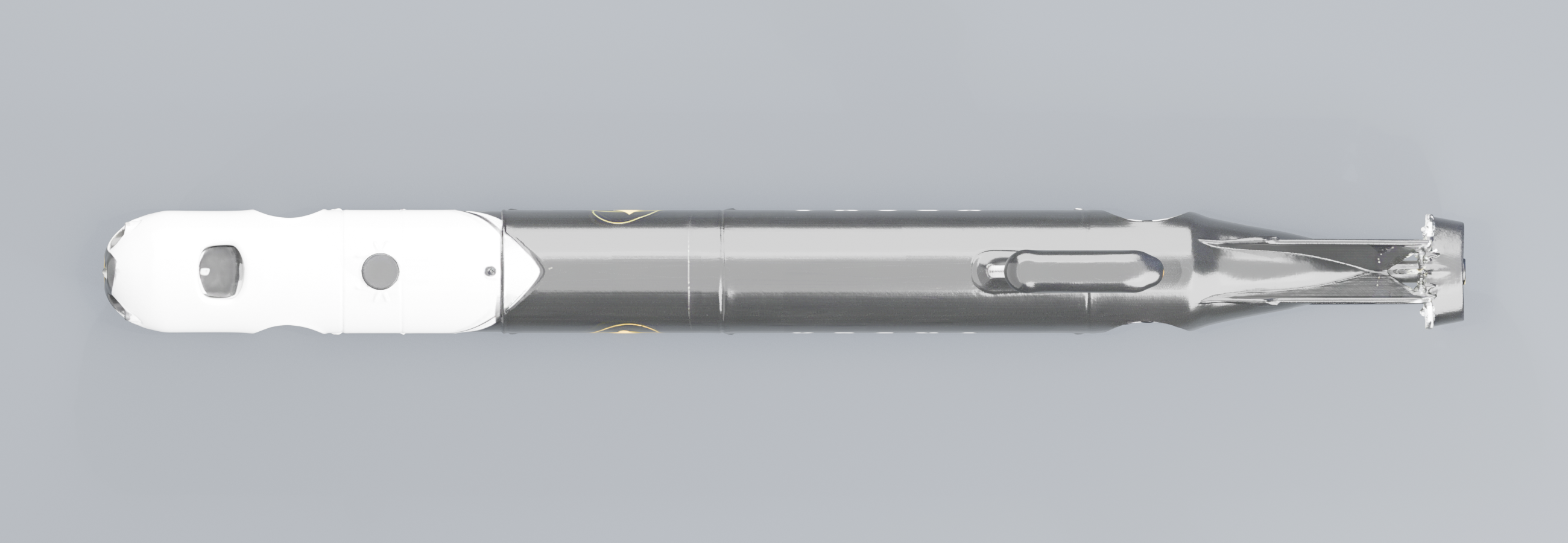
KRSNA top-down view
Sourced specification

Engineering figures, not marketing claims

Mass & depth

34–36 kg
All-up mass, air
100 m
Operating depth (≥150 m collapse; 300 m growth)

Speed & endurance

2.5 / 4.0 kn
Cruise / sprint (≤15 min)
8–11 h
Endurance (1.0–1.5 kWh pack)

Range & navigation

20–35 km
Mission radius, profile-dependent
0.05–0.5%
DVL-aided INS drift; 3–5 m bounded with USBL

Failsafe

Net positive
Buoyancy — self-surfaces on loss of power, autonomy or link
Live from Poseidon

Sim-flyable today. Not a mockup.

KRSNA's control architecture, 6-DOF dynamics and DVL-aided INS — with an honest drift model, not an idealised one — already run in the Poseidon simulator: a UE5 software-in-the-loop testbed with a full mission finite-state machine, forward and scanning sonar, and automatic evidence-pack logging.

Live telemetry: depth, heading, thrusters, scanning sonar, navigation mode — the same console a Poseidon operator runs today.